
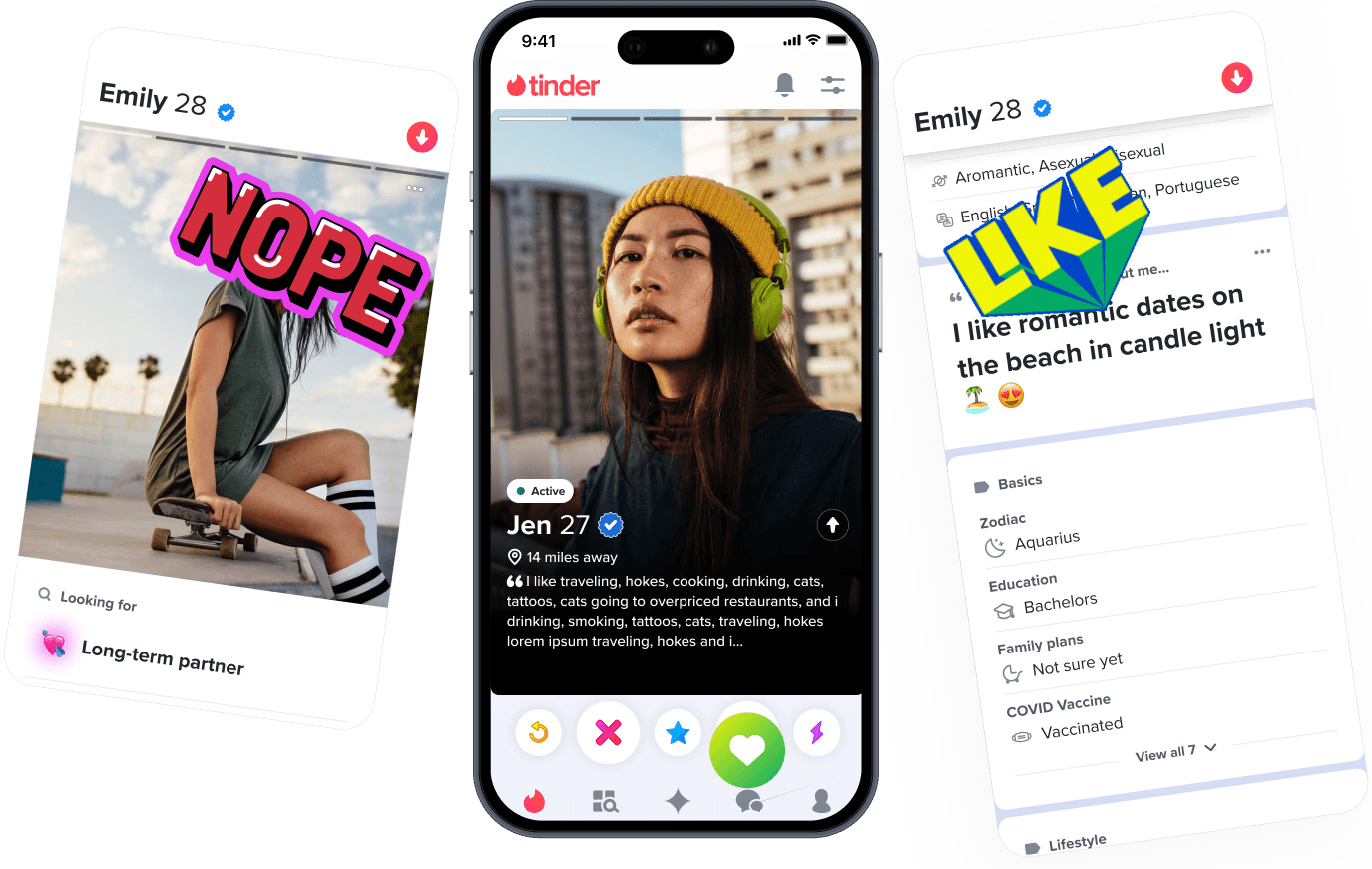
Optimizing the swiping experience at the interaction level
Role
Product Designer II
Focus
Interaction Design,
Visual Design
Timeline
2 Months, Q2 2024
Project type
Core Interaction Model
OVERVIEW
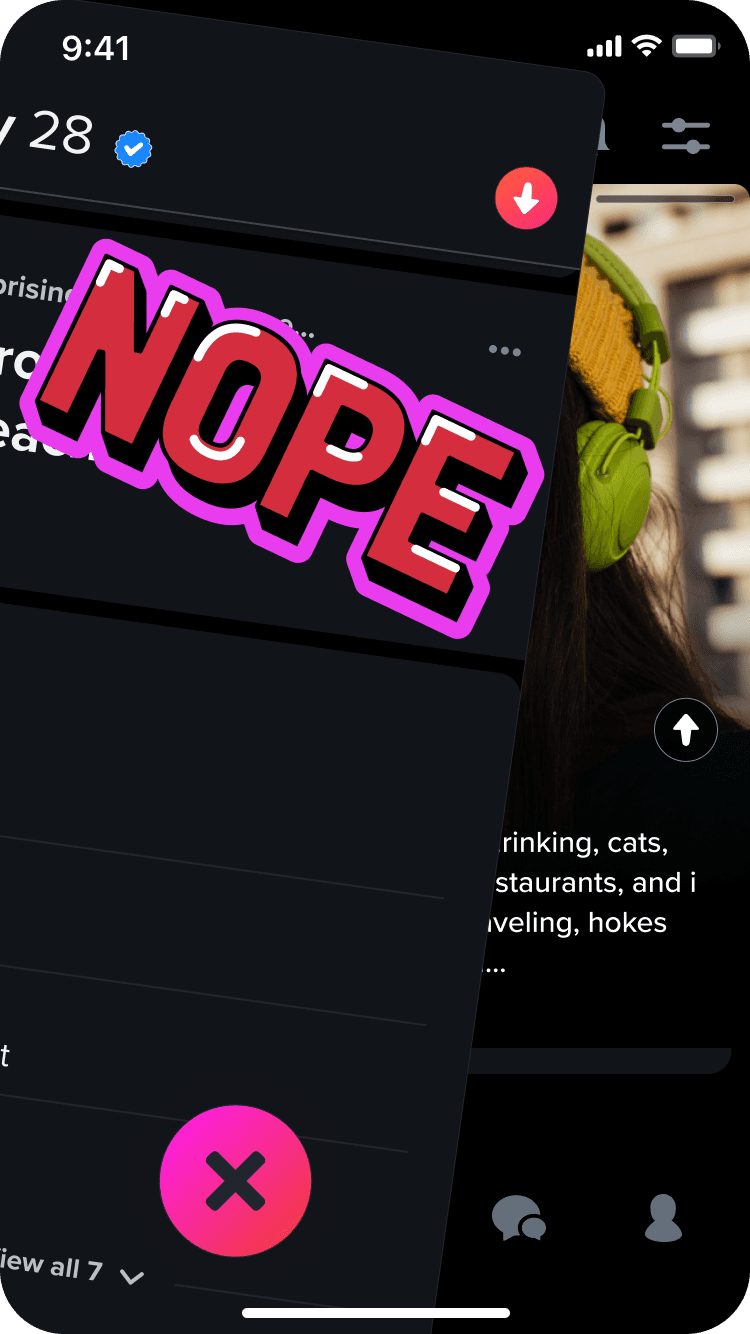
"Swiping Profile Details" (aka Core Interaction Modal v0.5) was a Core Product initiative to modernize Tinder’s most essential behavior: the Swipe. Years of layered features and A/B tests created friction, swipe fatigue, and high rates of accidental Super Likes, signaling a need for a more intuitive interaction model. This project became the groundwork for rethinking how users move, decide, and interact at the core of the Tinder experience.
RESPONSIBILITIES
As the lead designer (originally from the Trust & Safety pillar), I was brought in to rework a core interaction model and expand my skills in high-fidelity prototyping, interaction design, and systems-level interaction thinking.
I owned the end-to-end interaction within the profile swiping experience. This required rapid prototyping, interaction design exploration, edge-case handling across all swipe states, and close alignment with product, engineering, and research.
CHALLENGE
Swiping friction in Discovery
PROBLEM
Tinder’s swiping interaction had become inefficient and inconsistent. Internal usability tests revealed that users who expanded profile details to explore potential matches were unable to swipe, leading them to rely on the gamepad or skip profile exploration entirely. This friction disrupted the flow and slowed decision-making.
SOLUTION
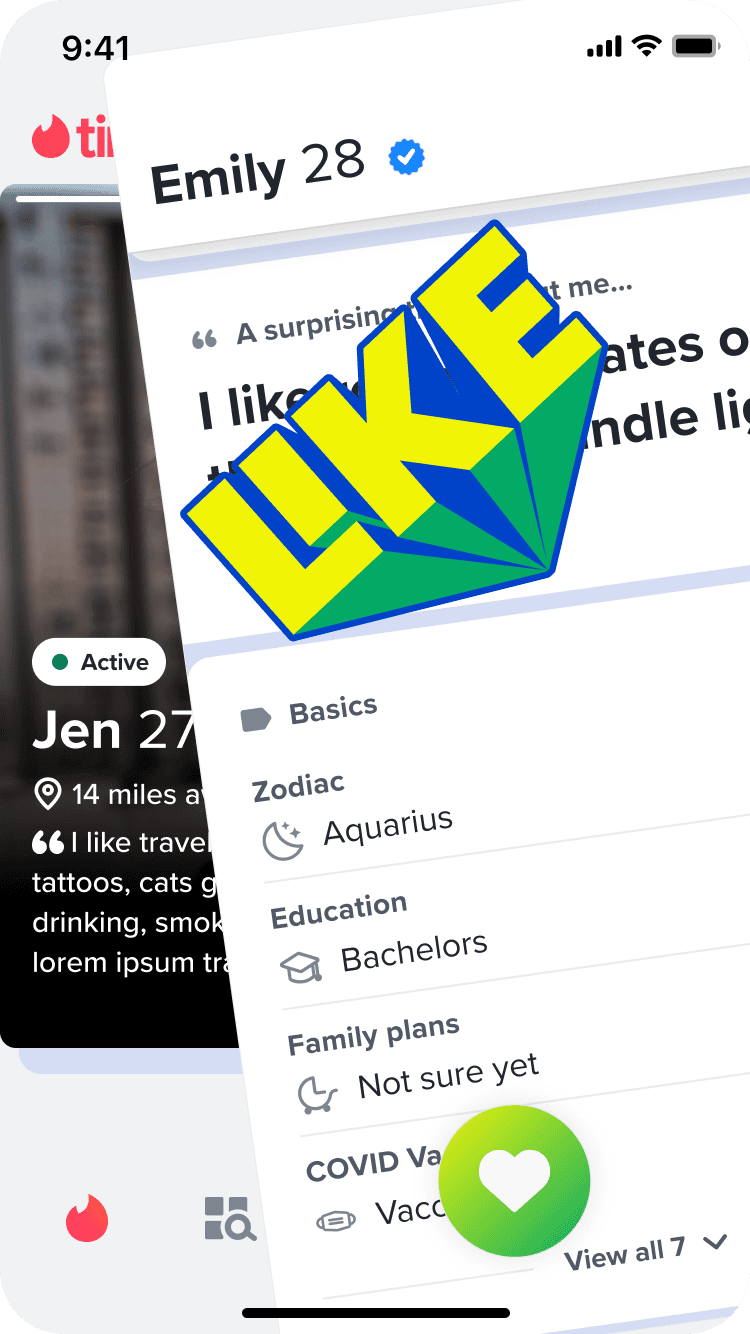
Removing this friction would make Discovery smoother and more intuitive. Making profile details swipeable could increase swiping efficiency, speed, and overall swipe volume, enhancing both user experience and business metrics.
DESIGN APPROACH
Identifying opportunities to improve the flow
FOUNDATION AND DISCOVERY
I began by analyzing the existing Rec stack and profile swipe interactions to define a smooth, efficient flow. Partnering closely with engineering, we aligned on performance constraints and ensured cross-device parity, especially for Android, which struggled with complex animations. To support brand consistency and reduce performance complexity, we also removed certain animations.
EXPLORATION AND PROTOTYPING
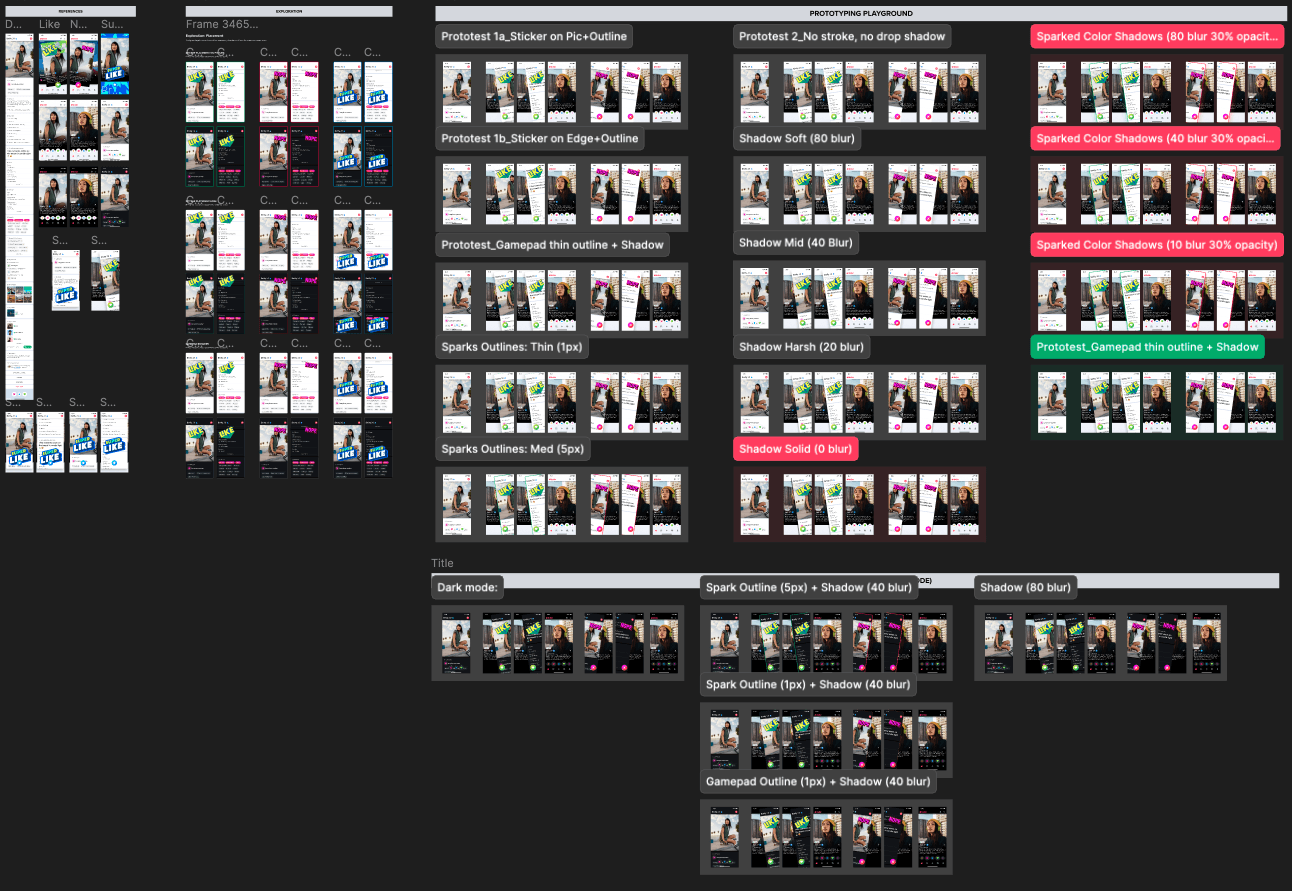
Before landing on the final solution, I explored multiple iterations, creating various designs of the card styling, stroke and color variations, animations, and microinteractions for Like, Nope, Superlike, and Match to create a more engaging experience. Feedback from stakeholders and design critiques highlighted issues around scroll conflicts, accidental triggers, scope creep, and performance, prompting me to take a step back. I refocused on the core problem, scaling back to prioritize clarity, efficiency, and user flow.
DELIVERY AND SPECS
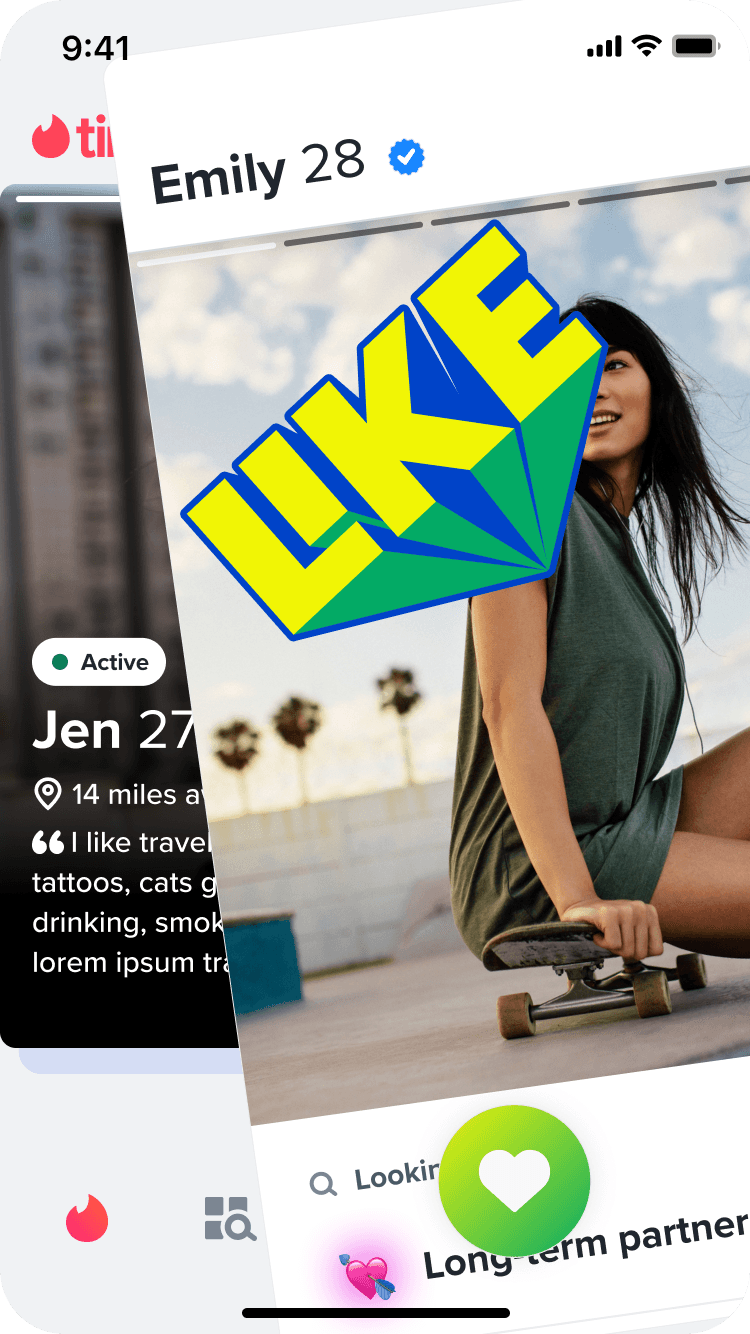
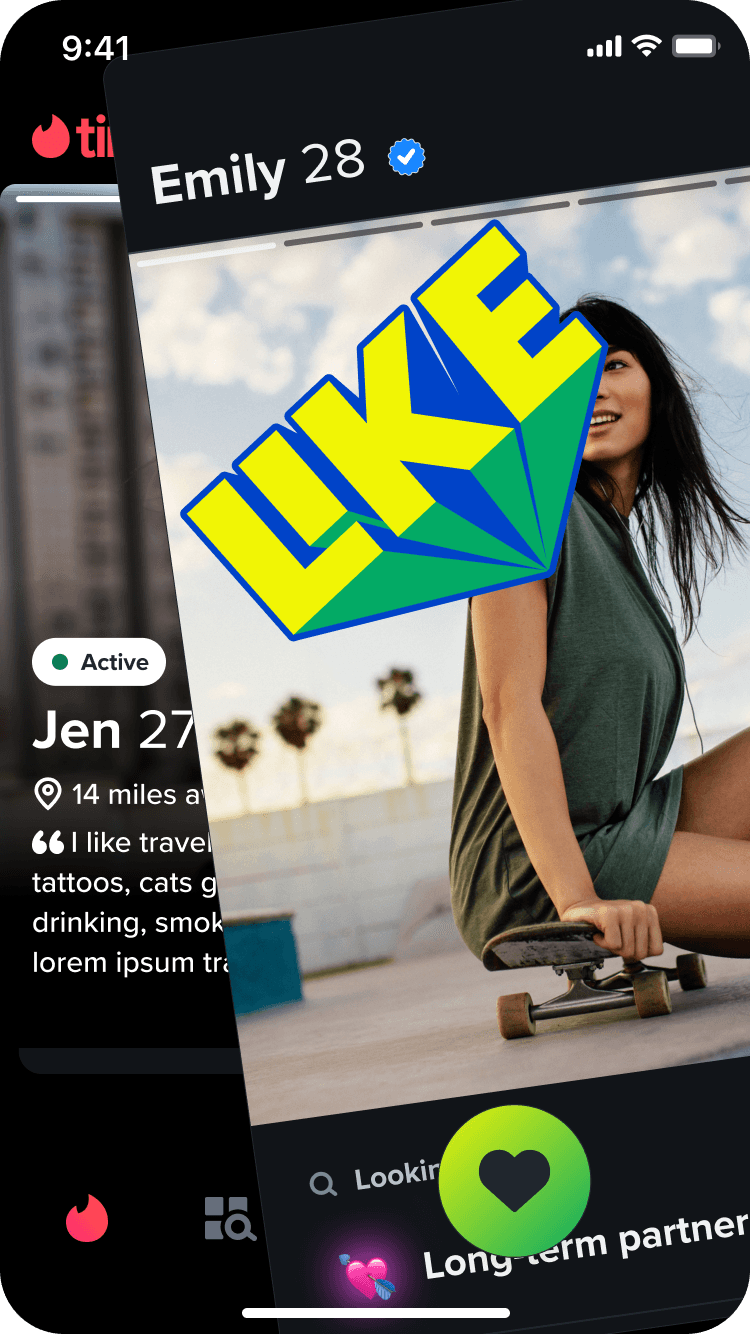
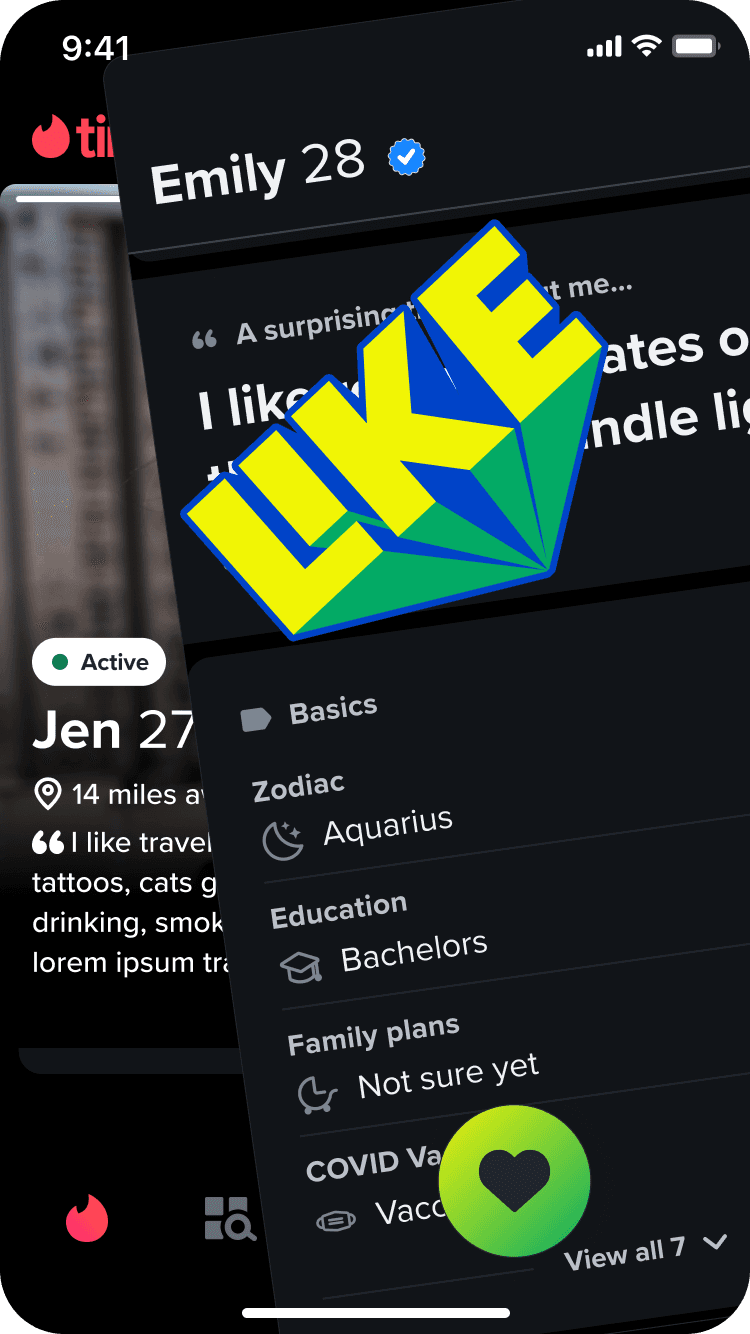
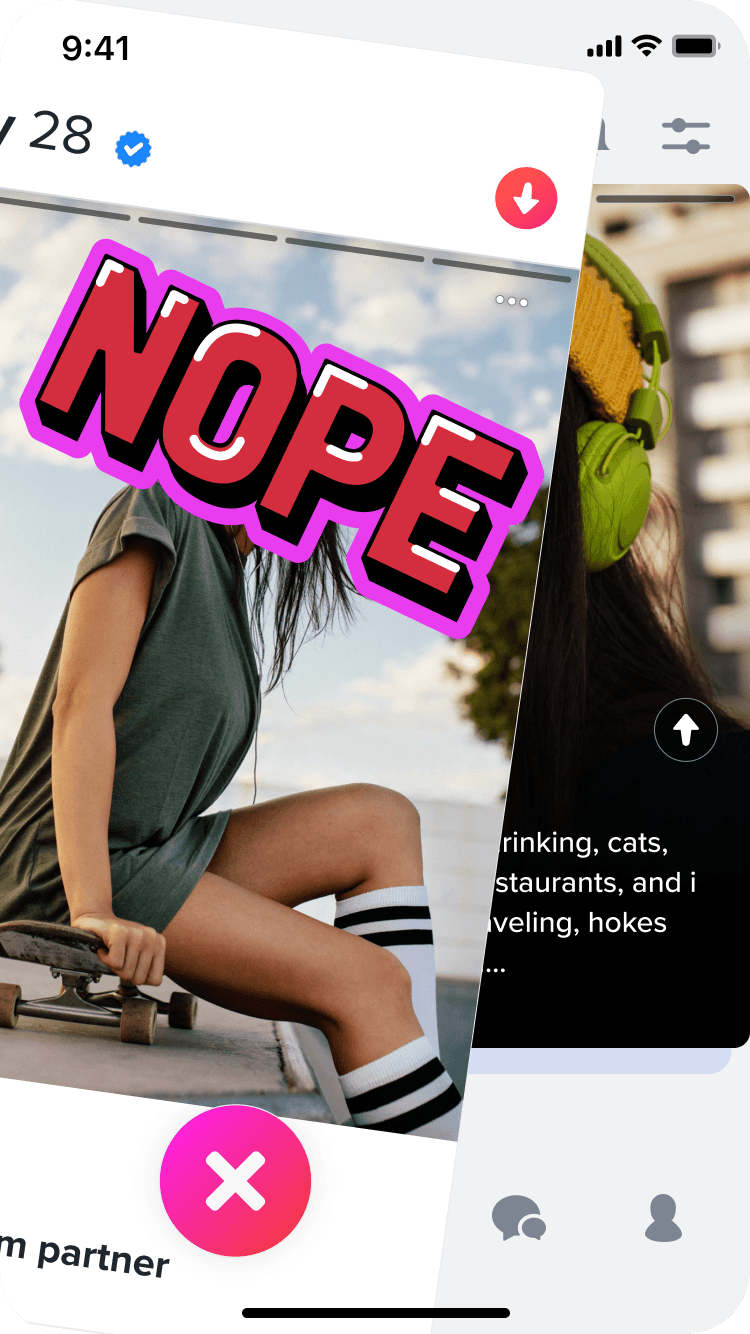
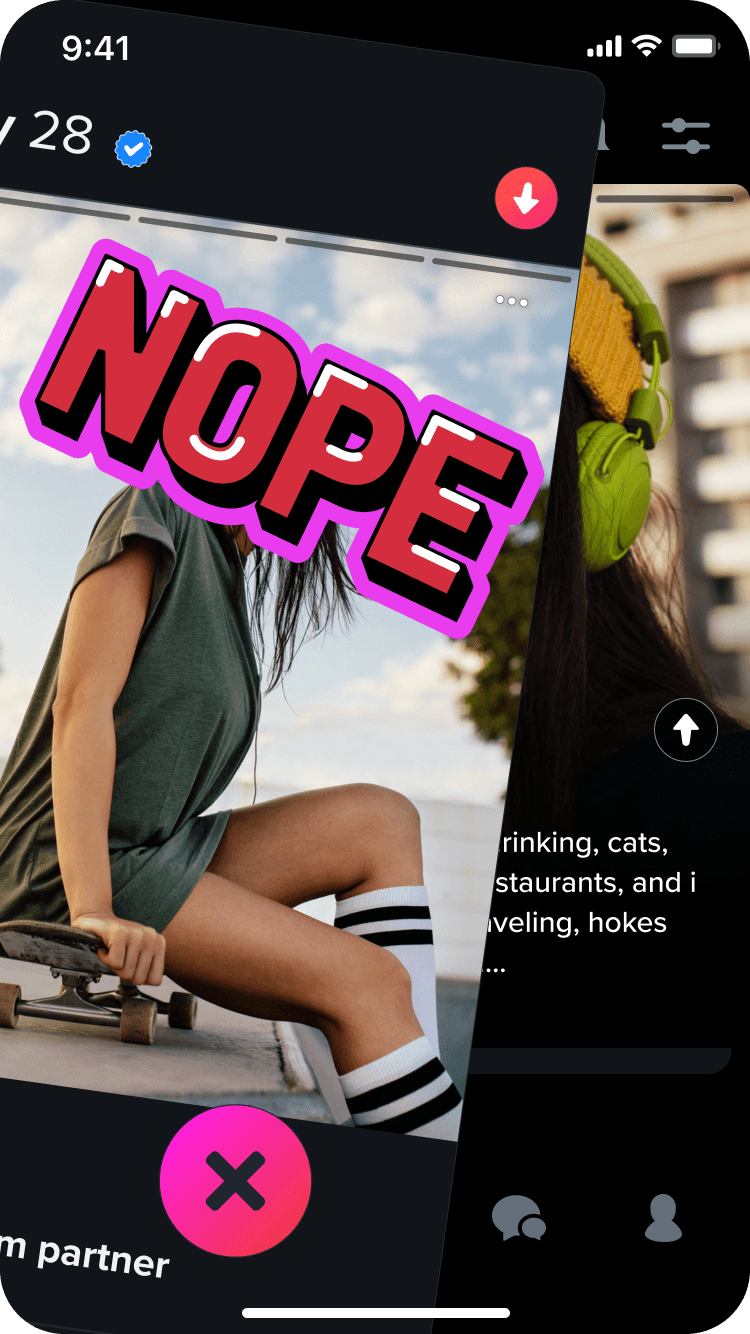
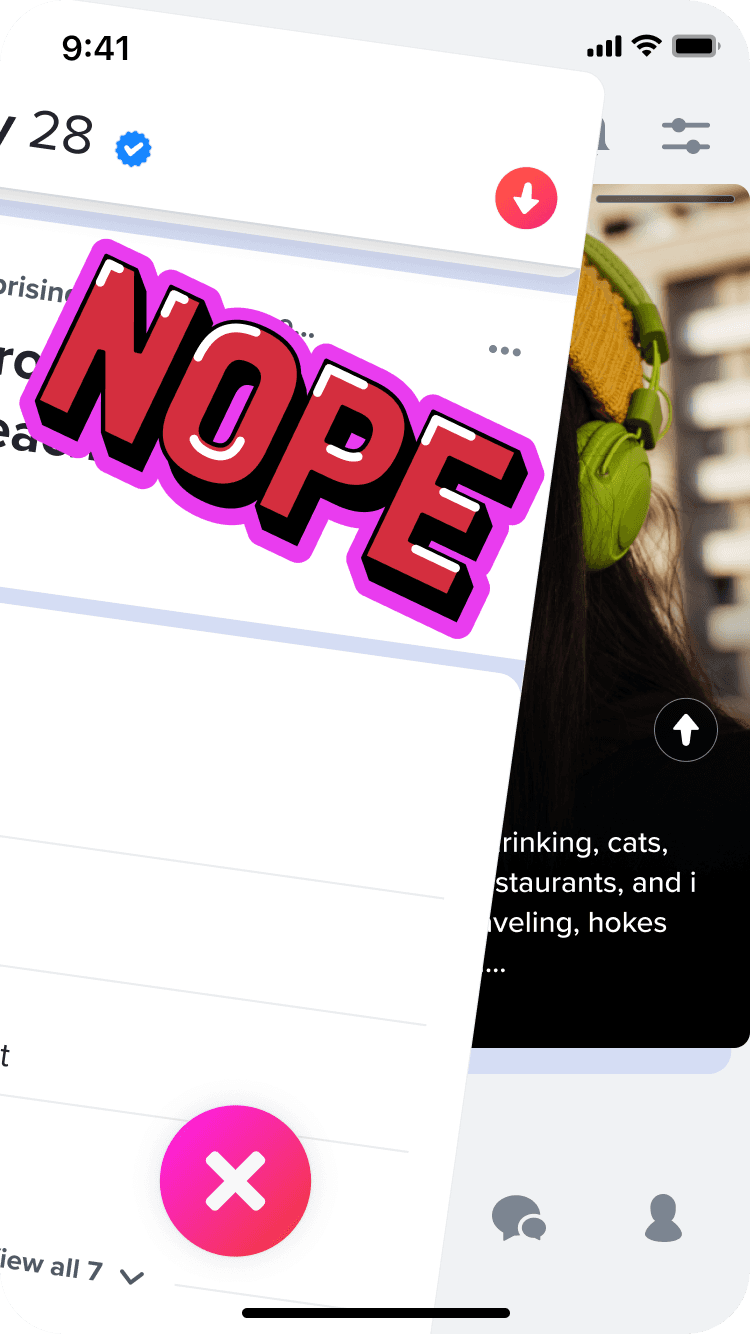
The final solution animates profile cards in line with Rec stack patterns, maintaining parity, consistency, and intuitive swipe flow. Designs were fully prototyped on Protopie for eng handoff, including edge-case flows to guide engineering and ensure smooth implementation.
Swiping Left–Light Mode
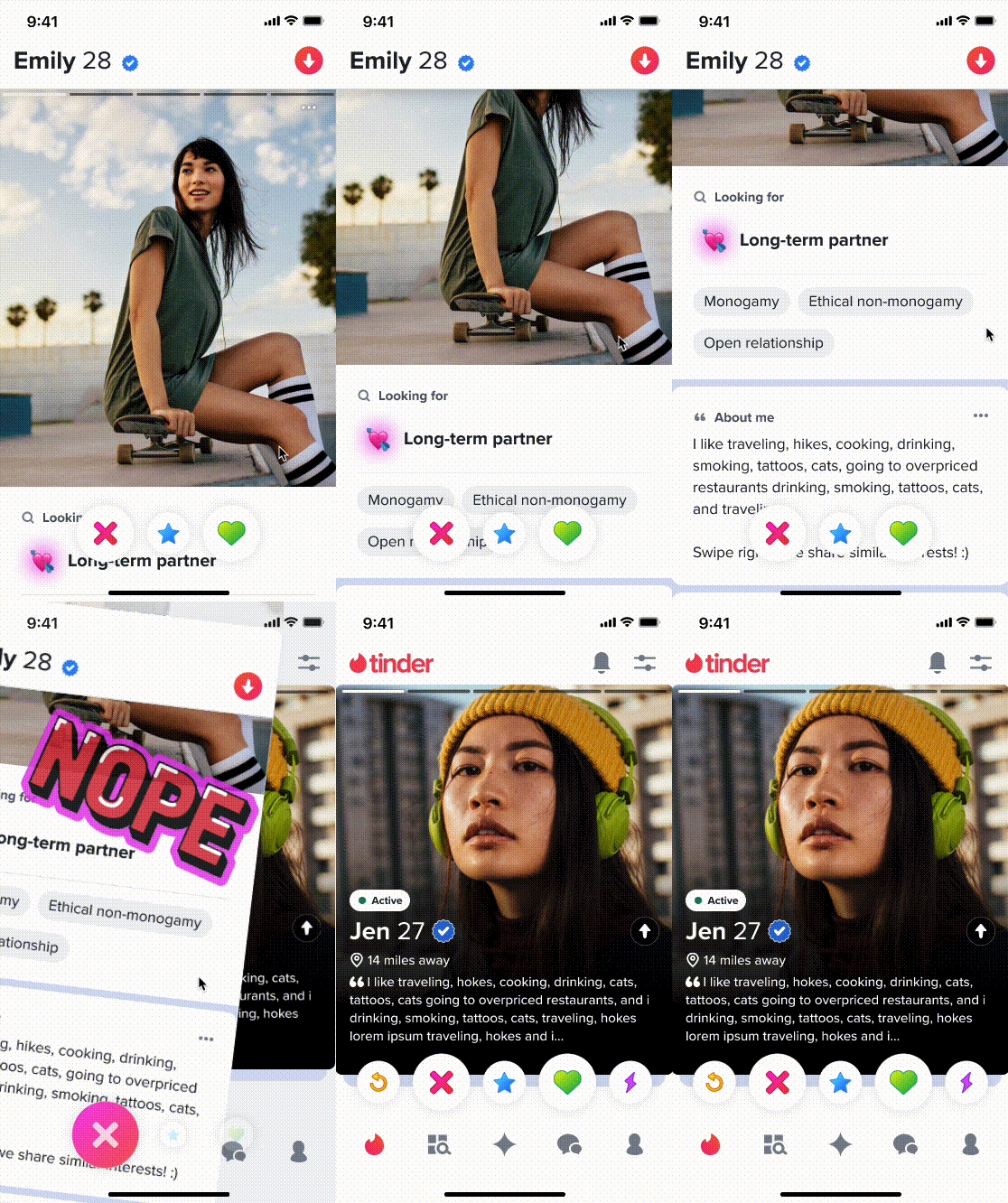
Swiping Left–Dark Mode

Swiping Right–Light Mode

Swiping Right–Dark Mode

DESIGN CONSIDERATIONS
Balancing functionality and guidance
SWIPING INTERACTION PAIRINGS
Profile details contained multiple layers of interaction—Matchmaker, Super Like paywall, and the Match experience—that triggered with swipes or gamepad actions. To ensure the new swipe interaction remained efficient, I mapped how these interactions would behave together, prioritizing a seamless and intuitive experience.
Matchmaker banner

+Superlike Paywall

+It's a Match

USER EDUCATION
Because profile details were historically non-swipeable, guidance was needed to help users understand the new interaction. Referencing Rec stack tutorials and internal research, we introduced a one-time automated animation on first profile view with minimal copy, keeping it simple and reducing localization complexity.
Light Mode

Dark Mode

RESULTS & IMPACT
Swipeable profiles drive more Likes and Matches
While Swipeable Profile didn’t change how often users opened profile details, making swiping easier within profiles led to a noticeable increase in swipe-right behavior, particularly among women, contributing to higher like sent coverage and overall engagement.
💞
At the ecosystem level, we see that Swipeable Profile is encouraging people who don't usually swipe right sending Likes (+0.35% in women and +0.13% in men). As a result, we see more women who didn't have matches before getting matched (+0.37%).
🔥
Focused on users who visited profile details and their swipes from profile detail, we observe that the lift in Likes Sent Coverage is stronger (+0.66% in women and +0.24% in men), and there is also a significant increase in Swipe Right Rate among female users (+0.92%).
These results highlighted that reducing friction in the swipe flow encouraged engagement without increasing cognitive load or requiring users to consume more information.
LEARNINGS
Key learnings from cross-pillar and team collaboration
Ramping on a new pillar team with different metrics and priorities was definitely challenging. I had to navigate ambiguity in scope while balancing creative exploration with efficiency goals.
Working closely with engineers and cross-functional partners helped me understand technical and performance constraints across iOS and Android. I got to explore multiple interaction ideas before converging on a scalable solution. Some exploratory designs had to be scaled back due to complexity or performance limits, and the initial ramp-up took longer than expected to fully understand platform differences.
In the end, grounding my designs in metrics, constraints, and cross-team alignment ensured the solutions were effective and scalable, and even the ideas we didn’t ship laid a solid foundation for this new, more efficient interaction model.